Every dashboard says the campaign worked but the outcome says otherwise. Add infinite content, negligible costs, deafening noise and the realisation that buyers don’t get more good content, just more. No wonder quality is what everyone wants to talk about.
Two tools that have proven useful in helping buyers find quality inventory and reduce wasted ad spend are curation and private marketplaces. Curation decides which supply deserves the budget. Private Marketplace (PMP) deals package supply into safe, simple-to-buy deals. But both stop at the same point: quality is decided before the auction, then the DSP takes over and optimises towards its own metrics.
Picnic’s Optimised PMPs are the evolution of both: deals that use PIQ’s placement-level quality data combined with live performance data to decide which impressions to bid on and how much each is worth, helping buyers hit the outcomes they set, in the DSPs they already use.
Why do metrics look fine but outcomes don’t?
Clicks and viewability, the metrics DSPs optimise towards by default, can look fine on a dashboard, while the outcomes fall short. Neither metric tells a buyer whether an ad placement was worth buying in the first place. A page can clear every viewability threshold and still sit inside a content farm. Clicks are cheap to earn on pages engineered to produce them. Meanwhile, estimates put wasted ad spend at 25–30%, and Picnic’s own data shows that more than 40% of domains fall below its Inventory Quality (PIQ) threshold.
And DSPs? They are built to maximise ad placements, optimise revenue and keep clients buying. Plus, when the system buying the media also decides what media quality looks like, the definition risks being shaped by what suits the platform’s business model.
That’s how a campaign hits its numbers and misses its objective.
How do optimised PMPs improve campaign performance?
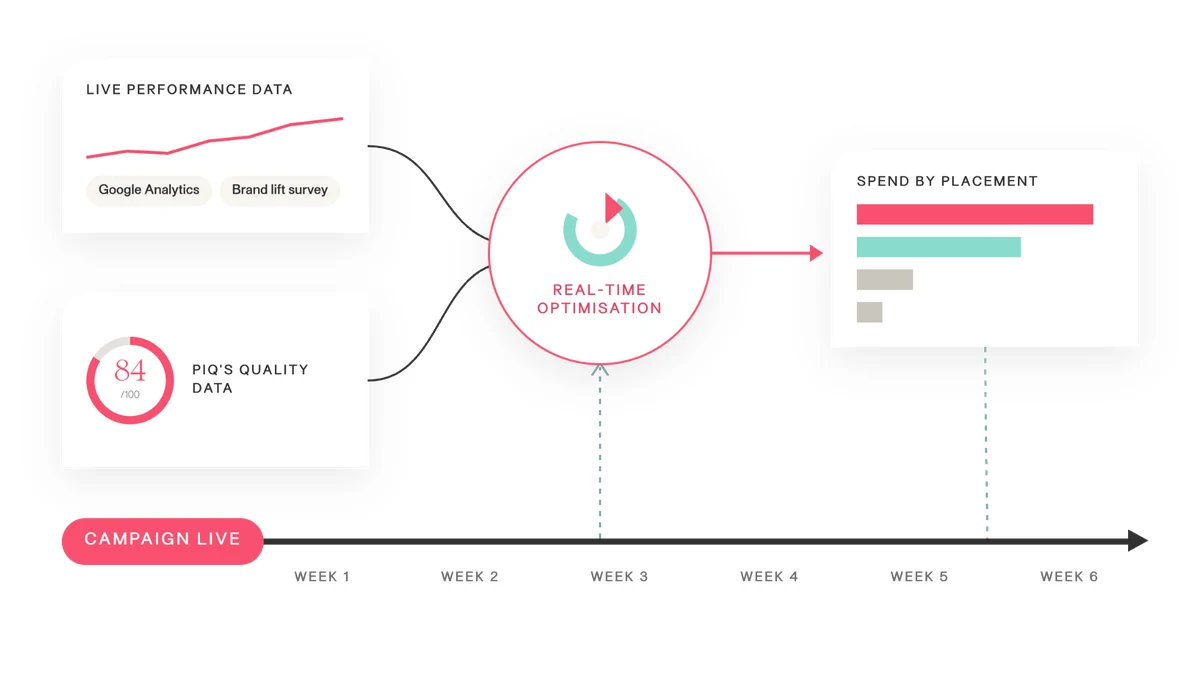
Optimised PMPs align bidding with the campaign’s objective by making placement-level quality data the input and the objective the target. For the buyer nothing changes: a PMP in their DSP remains a PMP in their DSP. What changes is when inventory quality informs the buying decision and real-time optimisation.
Standard PMPs & programmatic curation, as well as inclusion lists, all share the same limitation: they set where spend goes, not how it’s distributed across individual placements. And inclusion lists are simply not fit for the world of AI, where new domains appear in days, and lists are outdated the moment they’re written.
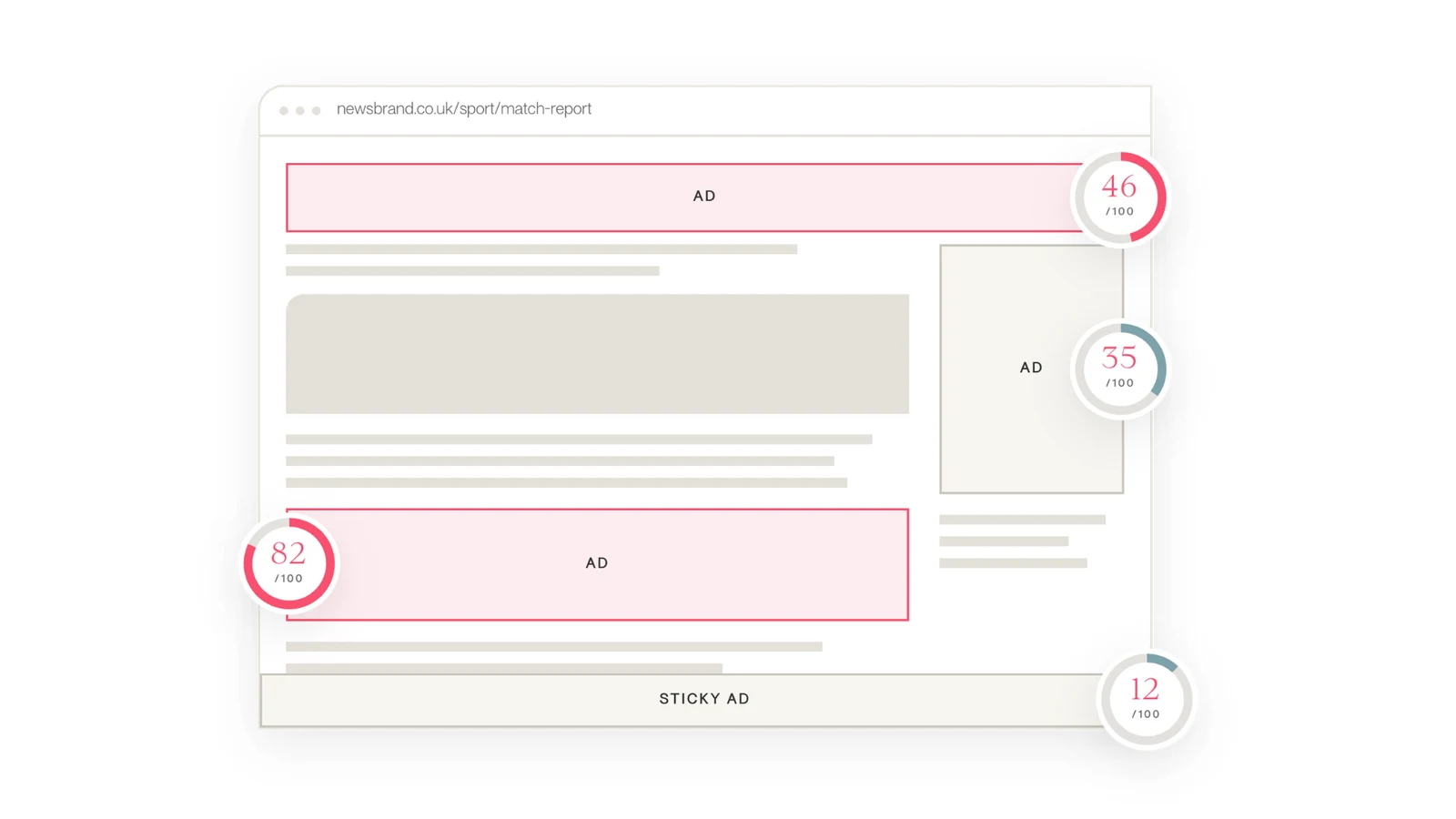
An optimised PMP gets past all that. It brings quality data down to the individual ad slot on the page, not just the domain, feeding that information directly into the bid. Real-time optimisation then closes the loop by sending live performance data, such as brand lift measurement, back into the algorithm. Delivery now shifts towards the placements moving the needle for the campaign and away from those that aren’t, with spend landing in environments a brand would choose to be seen in.
As past campaigns have proven, quality is an effective lever. A travel brand saw a 3.6% awareness uplift, 5x the benchmark, on a CTR of just 0.03%. A click-led optimiser would have walked away from this one.
What is containerisation, and what does it mean for campaigns?
Containerisation in programmatic means a buying decision is made on every impression, in real time, using quality data that sits inside the auction rather than beside it. The buyer’s path to supply doesn’t change, and the SSP’s supply and auction stay exactly where they are. What changes is that quality now goes into every bid, down to the last bit.
Think of a container as renting a co-working space inside someone else’s office building. You share the building and its infrastructure, and everything is a short walk away. With quality data running in a container inside the SSP, bidding happens where the impression enters the auction, reducing the distance between the quality assessment and the buying decision.
Launching with Index Exchange, Picnic’s PIQ data runs in such a container, matches each bid request to a PIQ PlacementID, and custom algorithms set that placement’s share of delivery. A container filled with Picnic’s own placement-level quality data, collected by its Browsing Agent visiting every publisher every day, with no licensed data in the mix.
Does quality optimisation reduce scale or raise CPMs?
Quality optimisation doesn’t harm scale or increase CPMs because PMP optimisation dials placements up or down depending on media quality rather than switching them off altogether; scale holds and wasted ad spend gets removed.
The container protects scale, as DSPs can’t process every bid request an SSP sends, so they throttle, typically seeing only around a quarter of available supply. Which quarter is decided by the DSP, not by quality. Because Picnic’s container sits inside the SSP, it filters out waste before that cut. What reaches the DSP is already quality-shaped. Buyers aren’t losing scale. They’re getting a better share of it.
What campaign objectives are available and how does a buyer choose?
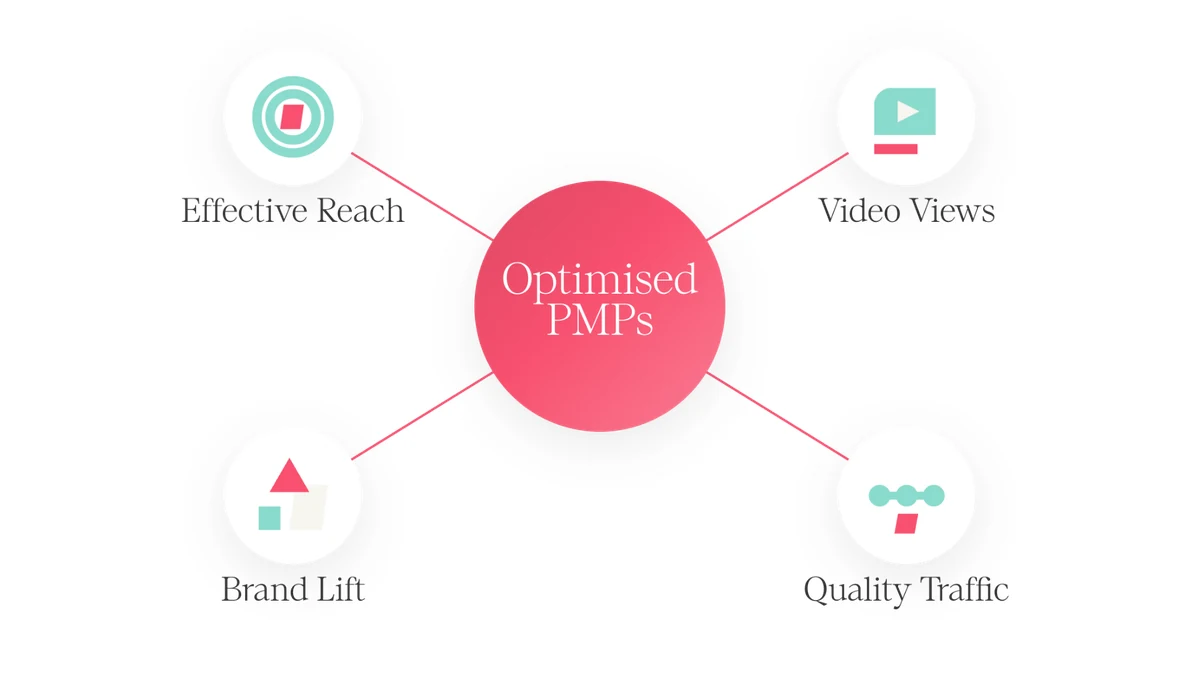
For each optimised PMP, the buyer picks one of four campaign objectives and its matching KPI:
Brand Lift is for shifting perception, optimised in flight on brand lift and cost per lifted user. Fewer, better-placed ads in quality environments outperform cluttered ones, so delivery tilts towards the placements where a message has room to land. A travel brand saw a 1.2% curation-driven consideration uplift.
Quality Traffic is for engaged, high-intent visitors, optimised on engaged sessions and cost per engaged session. Clicks from placements built for accidental taps are less likely to become sessions, so delivery follows engagement instead. On a public sector campaign, PIQ-curated inventory drove 3.6x more engaged sessions than non-curated inventory.
Video Views is for views where someone was actually watching, not the 15% of videos that keep playing after the user has scrolled them out of view. This solution optimises on video completion rate and cost per completed view. A PIQ-optimised retail brand saw view-through rate climb by a third, with sticky-player delivery down 56%.
Effective Reach is for cost-efficient reach at scale, in environments that create value, optimised on effective CPM and qualified unique reach. Buying reach on impression counts alone can spread the budget across environments no one actually sees. In Q3 2026, Picnic’s curation clients saved 27% of budget that would otherwise have turned into wasted ad spend.
What changes for buyers when decisioning moves to the sell side?
Nothing changes on the buyer’s side: it’s still one deal ID in the DSP they already use.
The buyer sets up the PMP deal, chooses the optimisation lever, and the hard work moves to Picnic. Sell-side curation and real-time optimisation then steer delivery towards the chosen objective and support the KPIs the campaign is judged on. Or, in the words of Picnic founder and CEO Matthew Goldhill: “The buyer doesn’t have to change anything, but gets a better product and ultimately, better performance.”
What the buyer gets back is an answer to the question viewability and CTR can’t answer: was the impression itself worth buying?
Want to put an optimised PMP in your next plan?
Talk to Picnic about bringing placement-level quality into your next campaign. Get in touch with the Picnic team.