When the client brief sets brand lift as the campaign goal but the brand lift study results only arrive after the campaign ended, that’s how a campaign can spend its entire budget before knowing if it achieved its objective. Buyers can continue this post-mortem cycle and use those brand lift study learnings for the next campaign. Or start using brand lift as an in-flight optimisation signal, steering delivery towards placements driving lift, all while the campaign is still running.
What is brand lift?
Did seeing this ad shift the way someone thinks or feels about a brand? That’s the simple question at the core of any brand lift study. Brand lift, as the name suggests, looks for positive shifts in an audience’s perception that happened due to advertising.
While viewability and CTR show a buyer whether an ad was delivered and clicked on, brand lift, measured across ad recall, awareness, consideration and purchase intent, shows whether advertising builds brand. Ad recall is whether people remember having seen the ad. Brand awareness measures whether they recognise or know of the brand. Consideration is whether it makes their shortlist when they come to buy. Purchase intent is whether they say they plan to buy it.
So while delivery numbers are the easiest to capture, and the default ones to optimise towards, when the goal is for advertising to shift and lift a brand, the number that really matters is brand lift.
How does a brand lift study work?
In simple terms, a brand lift study is a survey designed to ask whether advertising had an impact on people, because perception can’t be observed directly.
The brand lift survey uses a mix of questions about recall, awareness, consideration or intent. To make sure the results reflect the campaign and not everything else going on, the study puts those same questions to two groups of people: those who have been exposed to a campaign and those who haven’t. Matching the groups on age, gender and other characteristics keeps the comparison fair, and sample size and statistical significance guard against random results. The result, the lift, is the delta between the exposed group’s answers and the control group’s, which is the incremental effect attributable to the campaign.
While surveys remain the heart of any brand lift study, approaches differ on when and how the surveys are run and results are delivered.
The traditional approach involves commissioning the research, running pre- and post-campaign surveys, waiting for responses, then analysing and reporting the results some time after the campaign has ended. In-flight brand lift studies, on the other hand, survey people continuously throughout the campaign. It’s the same core practice of brand lift measurement, but with a different cadence of collection and reporting. Platform-run studies, such as Google’s, sit somewhere in between. Run alongside the campaign, they report once enough responses have come in, but only for media bought through that platform.
Either way, a brand lift study can tell a buyer whether the campaign moved a brand metric, by how much, and among which audiences. The further down it goes, though, the thinner the sample: survey responses are spread across thousands of domains and placements, and most slices are too small to reach significance. So the study says the work was done without reliably saying which placements did it.
Why do most brand lift studies arrive too late?
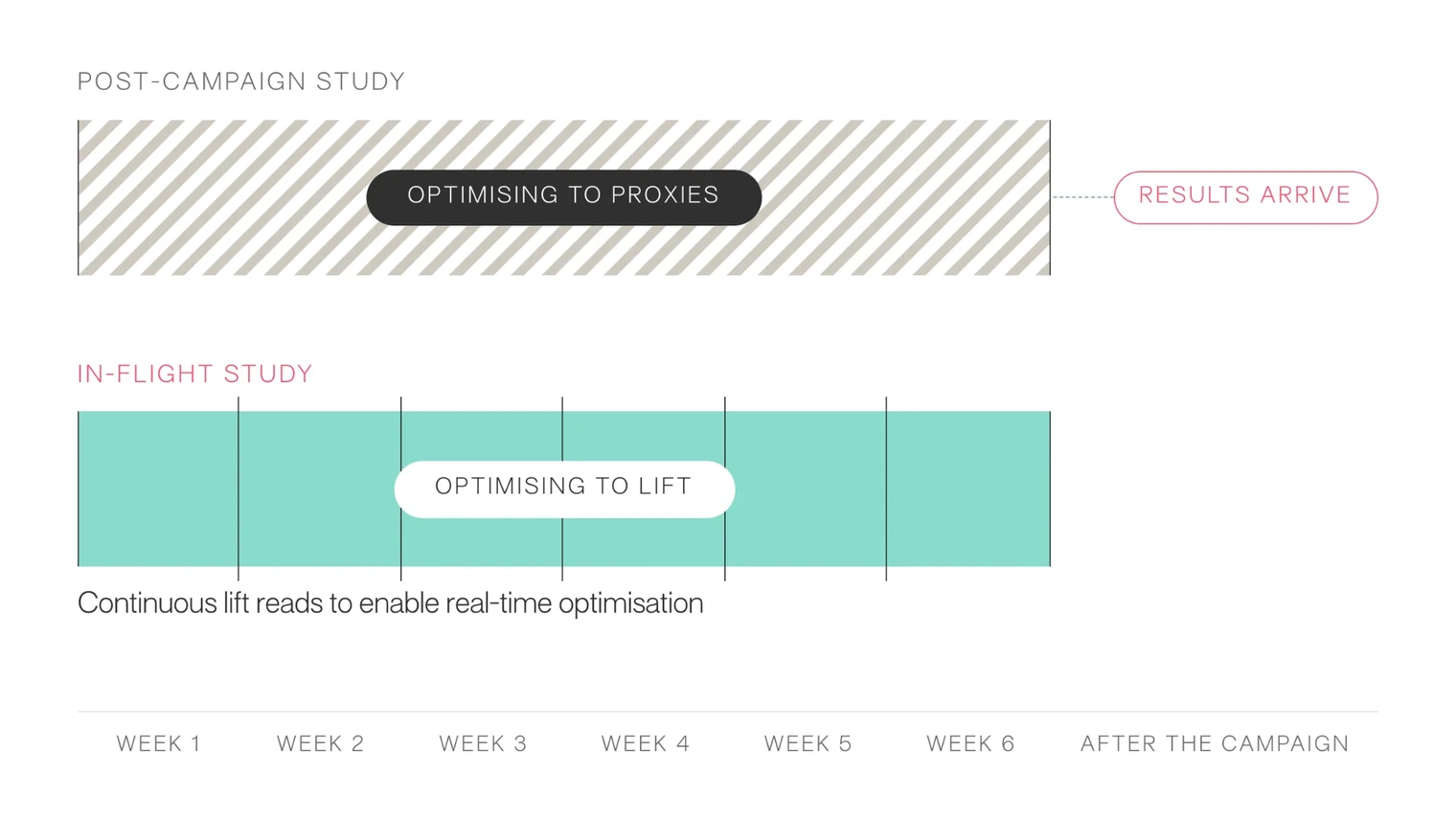
Most brand lift studies come with long timelines, large sample requirements and time-consuming manual analysis. Survey responses then build up over the flight, the data is cleaned and matched to exposure, and by the time the report finally arrives, the campaign has long ended. By then it’s too late to make any changes based on the findings. That budget is gone for good. But at least the survey results can be used for a future campaign. What’s more problematic is that during the campaign, while brand lift measurement happens in the background, buyers usually don’t sit idle. And with no brand lift signal to act on, they fall back on proxies like CTR and viewability to optimise what they can in flight. Neither tracks lift.
Across Picnic’s data, click-through rate falls as inventory quality rises: the pages that generate the most clicks are often the ones least likely to deliver brand value. And viewability only shows that an ad had the chance to be seen, not whether it was worth seeing, let alone being remembered. Optimise towards either one and delivery drifts to wherever the numbers look best, whatever the audience ends up thinking of the brand.
A travel brand shows how far the two can part company. In a past campaign, the brand shifted spend towards inventory scoring higher on PIQ and saw a 3.6% awareness uplift, 3.2% increase in favourability and 1.2% in consideration, around five times comparable benchmarks, on a CTR of just 0.03%. A click-led view would have called it a total miss, and only a brand lift study showed it wasn’t.
How does real-time optimisation for brand lift work?
Brand lift studies produce real-time data. Data that is usually only used with a delay. The limitation, then, isn’t necessarily the measurement itself, but the timing. Real-time optimisation for brand lift changes that, turning a brand lift study from an end-of-campaign report into a live signal. Same measurement, different use.
Picnic runs those studies with independent measurement partners, Happydemics and Cint, which specialise in in-flight brand lift studies.
Surveys are run continuously through the flight, not in one burst at the end, with each live read comparing exposed people with a matched control group. Picnic maps those results back to the placements the impressions ran on, and Picnic’s custom bidding algorithm learns which environments are moving perception and which aren’t. Delivery then tilts towards the first group and away from the second. Then the loop repeats for the whole flight, improving the campaign’s performance as it runs.
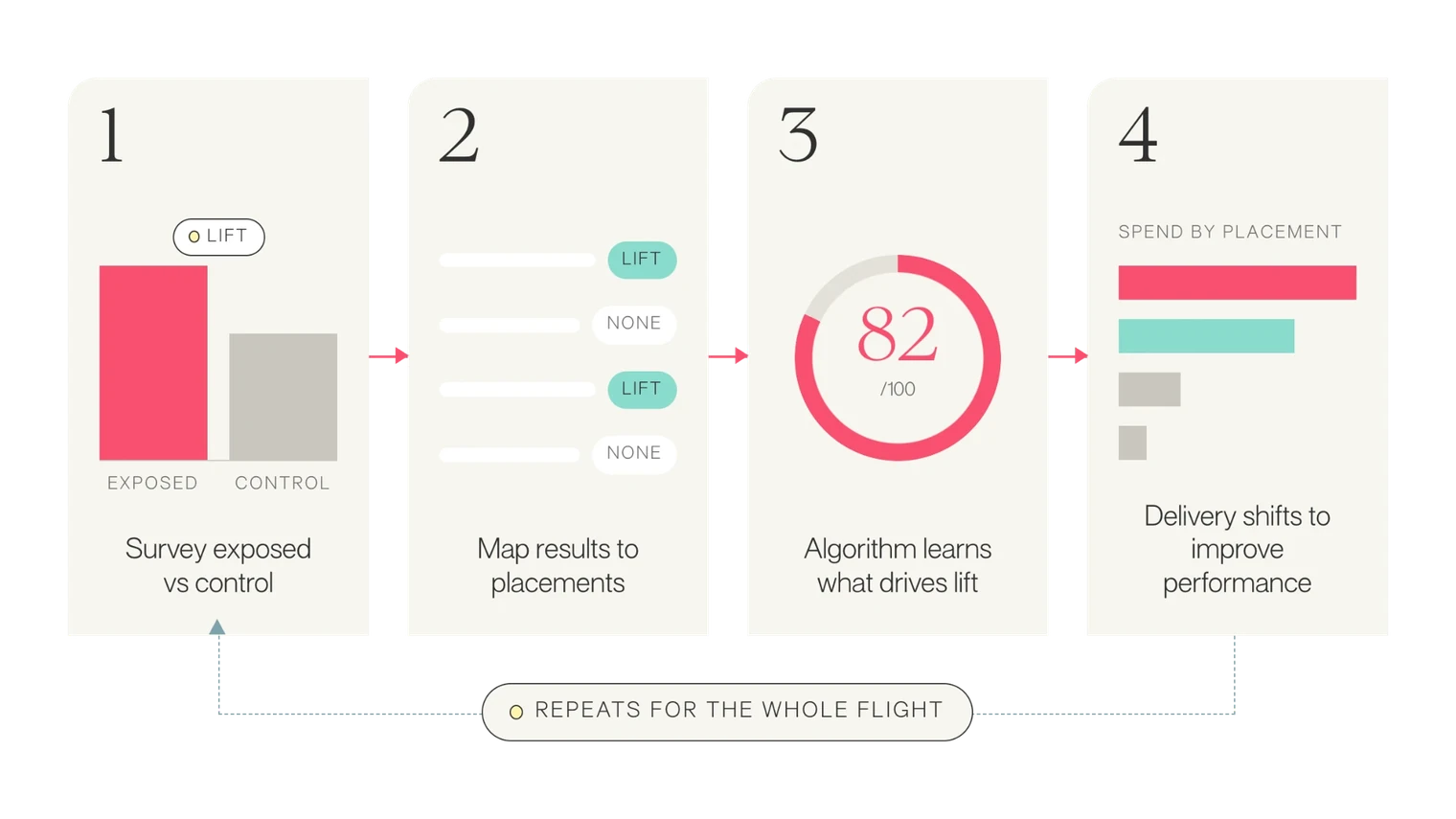
The result is in-flight brand lift optimisation and brand lift measurement KPIs a buyer can act on in real time, rather than falling back on the clicks and viewability that stand in for it.
How does inventory quality improve brand lift?
Brand lift depends on many components, the creative first among them, but even the ideal ad doesn’t land the same way everywhere. Inventory quality improves brand lift by pairing the creative with the right inventory, shaping where the ad runs. Combining brand lift results with placement-level quality data tells a buyer not only that the campaign worked, but which placements made it work. Knowing where and why lets delivery shift placement by placement and not just campaign by campaign.
Picnic’s 2023 YouGov survey found that 72% of respondents say intrusive ad experiences have negatively affected their perception of a brand, and 71% are less likely to purchase from one. An ad is judged partly by the company it keeps.
A controlled test for Clearpay, run with Goodstuff and measured independently by Cint, put that question to the test: does the inventory a brand runs in change how people feel about it? Identical creative, audience and delivery window ran across two PIQ-scored inventory sets, one scoring above 30 and the other below. Viewability and CTR were broadly the same in both, brand consideration was not: it landed 0.7% above Cint’s benchmark on the set scoring above 30, delivering 4.8x the brand consideration lift of the open-web average. The set scoring below 30 landed 2.0% below the benchmark. That’s a 2.7-point spread that inventory quality alone accounts for.
The reason for the brand lift sits in the placement. PIQ’s signals, weighted by campaign objective, read inventory quality at the level of the individual ad slot: average share of screen, how many competing ads share the viewport, how close the unit sits to the reader’s path of attention. Each shapes whether a message has room to land, which is what a positive brand lift result depends on.
How do Optimised PMPs improve brand lift in-flight?
Picnic’s Brand Lift Optimised PMP combines both in-flight data streams: brand lift study data and placement-level quality data. Both feed Picnic’s bidding algorithm, which learns which placements produce a lift for a particular brand and campaign, and finds more of them.
It runs as one PMP in the DSP the buyer already uses. The buyer sets up the deal, chooses Brand Lift as the campaign objective, and the hard work moves to Picnic. Behind the deal ID, Picnic’s model and placement-level quality data sit in a container inside the SSP, so only the impressions most likely to move the brand metric reach the DSP in the first place. The campaign’s study results keep refining which ones those are throughout the flight.
Two KPIs sit at its centre. Brand lift is the measured shift in ad recall, brand awareness, consideration and purchase intent, from studies run with Picnic’s measurement partners against a matched control group. Cost per lifted user (CPLU) is the cost to shift one person’s perception of the brand, which turns lift into an in-flight optimisation metric a buyer can act on.
It turns brand lift from a retrospective campaign objective reported at the end into a true in-flight metric the campaign runs on. The same ad budget now returns more lift, because spend stops funding placements that won’t move the brand metric while there is still time to change it.
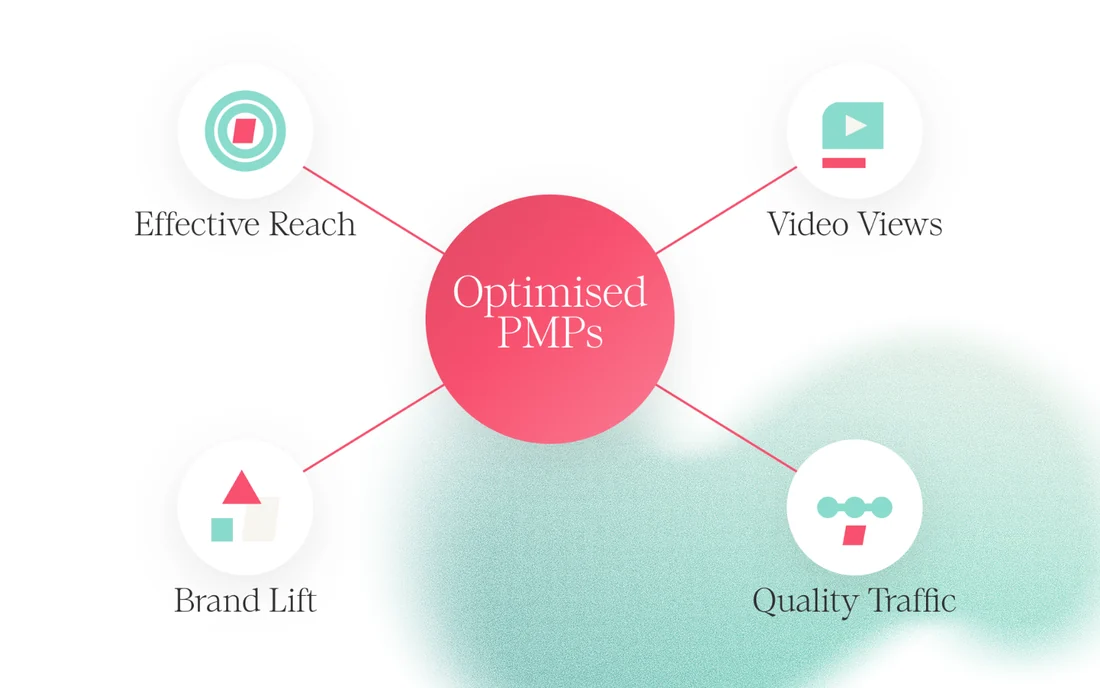
Brand Lift is one of four objectives an optimised PMP can be built around, and the Optimised PMPs hub explains how the rest of the model works.
Want to act on brand lift while the campaign is still running?
Book a demo with the Picnic team.