Reach and frequency have been the classic pillars of marketing for as long as there has been marketing. Unique reach as a metric came along in digital around ten years ago. But across channels and devices, with bots and AI traffic in the mix and sites with questionable user experience, even unique is not necessarily unique any longer.
Unique reach is still the number most buyers report on, and it can stay that way, as long as it is backed by effective reach: budget that adds incremental reach, grows unique reach among people who actually see the ad instead of repeats, and spends less on impressions no one could see.
What is unique reach, and why isn’t it always unique?
Unique reach, as the name suggests, is the number of unique people a campaign reached. In theory each person is counted once, however often they saw the ad. Divide impressions by unique reach and the result is average frequency. Where does the trouble start? Not all reach is equal.
Reach based on served impressions counts everyone an ad was delivered to: whether one person sits behind several devices, or several people behind one device, whether or not the ad was ever in view, whether a bot or AI crawler was on the other end, or whether the page was so crowded with ads that no one noticed the counted one.
That is how a dashboard can give the impression of unique reach while much of it is neither unique nor reach. Unique, but with the same people seeing the ad again, is not unique. An impression no one could see is not reach at all. How much of the reported unique reach does this apply to? Most buyers cannot tell.
What’s the difference between unique reach and incremental reach?
Unique reach is the total; incremental reach is the slice on top of it: the additional unique audience one channel, campaign or tactic reached that the rest of the media plan had not already.
Take two campaigns. Campaign A reaches 1,000,000 people. Campaign B reaches 600,000, but 200,000 of them also saw Campaign A. The plan’s unique reach is 1,400,000, and Campaign B’s incremental reach is 400,000. The 200,000 gap is duplicated reach: real people, but already counted.
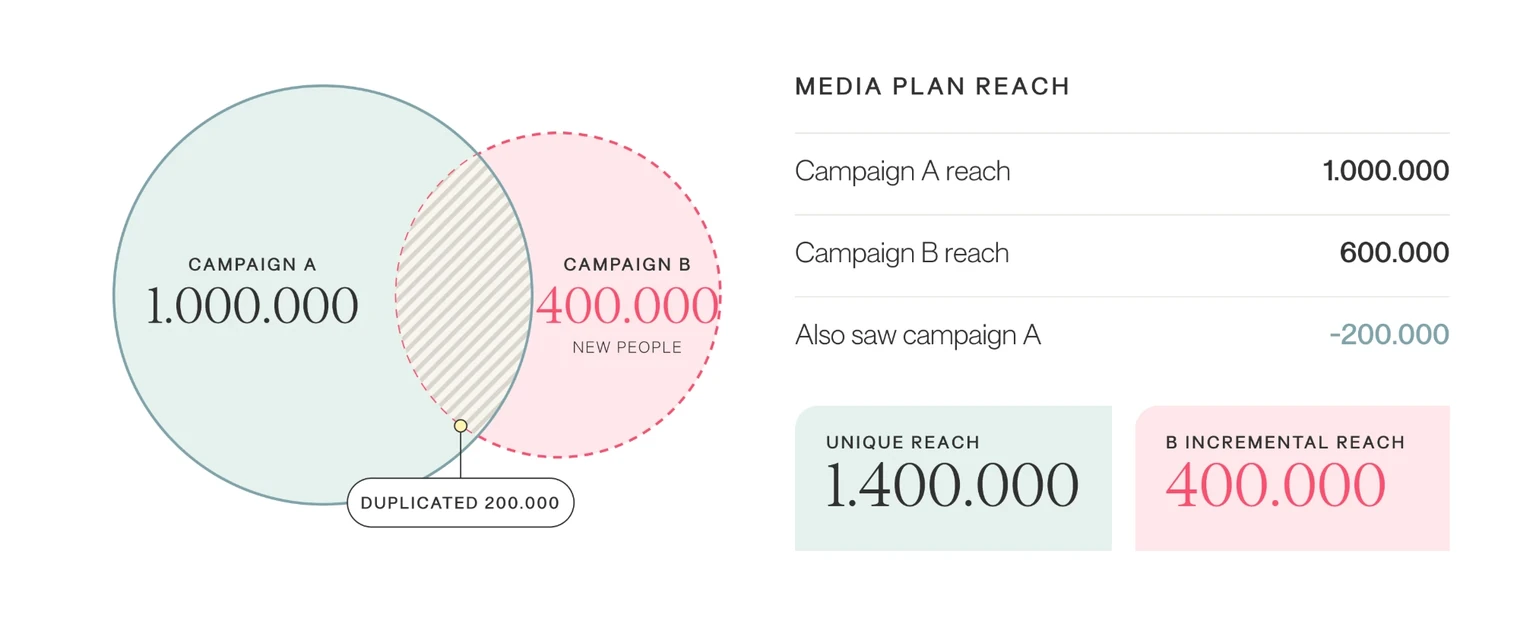
Unique reach asks: “How many unique humans saw my ad in total?”, while incremental reach asks: “How many new people did Campaign B bring me that Campaign A missed?” That second answer shows whether the additional ad spend on Campaign B is actually buying anyone new.
Why does frequency climb without reaching new people?
Frequency can climb while unique reach barely moves, because the same people absorb the extra impressions over and over again.
The best-known cause is channel overlap combined with weak frequency capping. The same person turns up across channels, devices and campaigns and gets treated as unique in each. Frequency caps, meanwhile, are stuck in silos. Unaware of the overlap, they give the green light. That is how duplicated reach happens, like the 200,000 in the previous example, and why the same people get hit with an ad time after time while others are never reached.
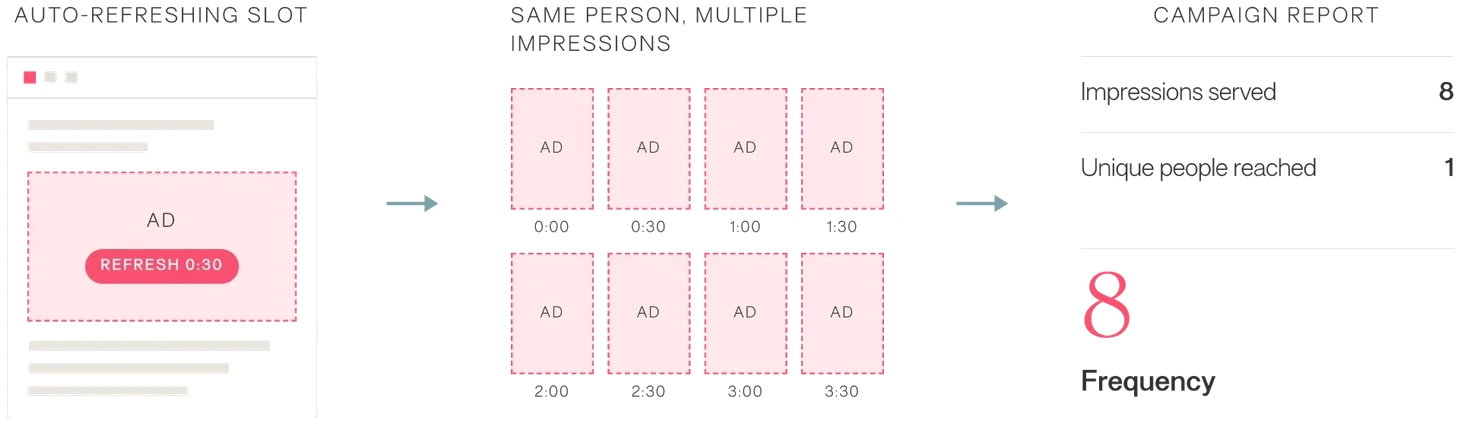
The less familiar frequency climb happens within a single visit. Ad-heavy, auto-refreshing pages reload their ad slots at short intervals, so one person is served an entire run of impressions in one visit, where the only uniqueness is the visit itself. The site UX inflates frequency while reach stands still. The report might suggest a campaign needs more budget, when it actually needs different inventory.
How much of your reach is wasted?
Wasted reach is the gap between the reach a report shows and the reach that counts. It comes in two forms: audience a campaign never reached, and reach that was counted but was not worth it.
The audience a campaign misses, as Samsung Ads’ research found, can be as high as 41%. That campaign is not a total loss, it bought impressions that landed, but it piled all of them onto as little as 59% of its intended audience. That figure comes from TV and CTV rather than the open web, but the mechanism is the same: the budget lands on the same people over and over while others see nothing.
The second form of wasted reach sits within the reach that was delivered. Impressions that never loaded or were never in view, invalid traffic and pages built to maximise ad load, the hallmarks of digital decay, can all end up counted as reach in a standard report. An impression that fails to drive a meaningful outcome, or lands on a person who could not see it, is textbook ad waste: that person has not, in any useful sense, been reached.
How much of a given campaign’s reach is wasted depends on the supply it ran on. The ANA’s 2023 programmatic study found advertisers were wasting 23% of programmatic dollars through ineffective ad placements, and its Q1 2026 programmatic benchmark found higher-performing advertisers lost 19.0% of spend to media quality issues, and lower performers 38.4%. Both count spend rather than reach, but spend that never became a qualified impression is the equivalent of reach that never counted.
How does inventory quality improve effective reach?
Inventory quality improves effective reach by closing the gap between the reach a report shows and the reach that actually occurred, prioritising placements where a person had a real chance to see the ad.
PIQ, Picnic Inventory Quality, scores every placement from 0 to 100 on 100+ quality signals. Weighted by campaign objective, five of them go straight at wasted reach. Ad density flags the crowded pages, refresh rate flags the ones that auto-refresh, and loading speed shows how quickly the page becomes usable. Layout shift shows how much the page moves as it loads, and ad position where the unit sits on it. Delivery gets steered away from inventory where reported reach piles up faster than the real thing, and placements scoring below 30 are excluded by default as wasted reach. Now impressions that would have inflated frequency never make it into the campaign in the first place.
Taking the wasted reach out of the plan, Picnic redirected 27% of its curation clients’ budget in Q3 2026 alone, away from inventory that would have turned into wasted ad spend and towards reach that counts.
How do optimised PMPs grow unique reach without wasting ad spend?
Picnic’s Effective Reach Optimised PMP puts PIQ scoring to work right inside the buy. Placement-level quality data shifts delivery in real time, away from ad-heavy, auto-refreshing and underperforming placements and towards environments where real people see the ad.
It runs as one PMP in the DSP the buyer already uses. The buyer sets up the deal, chooses Effective Reach as the campaign objective, and the hard work moves to Picnic. Behind the deal ID, Picnic’s model and data sit in a container inside the SSP, so impressions are judged placement by placement before they reach the DSP.
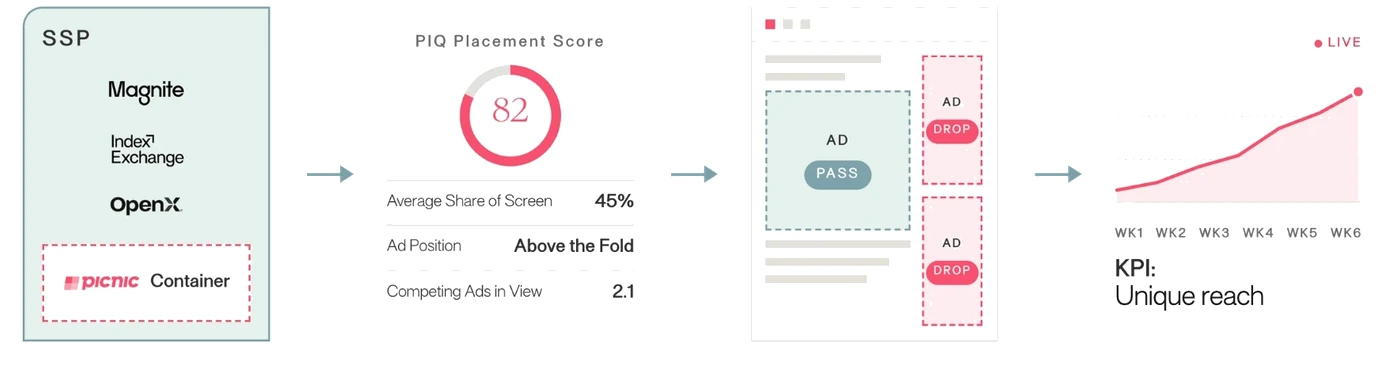
That scoring works from day one. PIQ pairs placement-level quality signals with historical campaign data to identify placements likely to grow unique reach, so decisions are informed from the first impression. Once the campaign is live, performance is matched back to the specific placements that drove unique reach, and the algorithm shifts spend towards the strongest of them while the campaign is still running. Buyers start with a better chance than a standard campaign gives them, and the optimisation improves it further by the end.
Picnic’s Effective Reach solution can optimise for:
- Unique reach: the number of different people reached, counted only where the ad could actually be seen.
- CPM: the cost per thousand impressions, read alongside unique reach so buyers can see what they are paying for each person actually reached.
The benefit is less wasted spend for each unique person reached, and budget that can now go towards people the campaign has not reached yet. For buyers asking how to increase reach, the answer starts with subtraction: stop paying for reach that was never there.
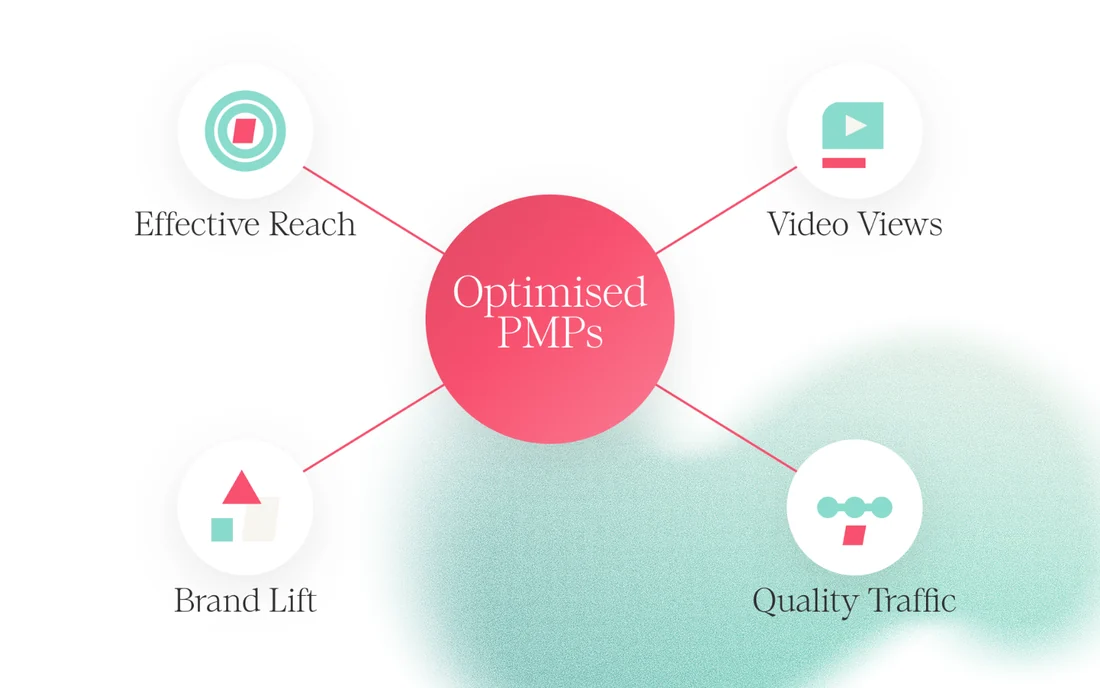
Effective Reach is one of four campaign objectives an optimised PMP can be built around, and the Optimised PMPs hub explains how the other models work.
Want to find out how much of your reach is wasted?
Book a demo with the Picnic team.