Display ads can have a healthy-looking CTR and yet hardly deliver any conversions. The dashboard looks fine, but the sessions behind it, less so. Best case, a low-intent visitor landed, glanced and left the page. Worse case, the click was accidental to begin with. In both cases, there was a click, a bounce and no conversion.
Most advice on solving this focuses on keywords, landing pages or targeting. Useful, for search campaigns. In display and programmatic, though, the root cause sits where the click happened: the placement. So buyers need to shift their budget to placements where people click on purpose, and measure the result in engaged sessions. Then the CTR-to-conversion gap will narrow.
Why do display ads get clicks but no conversions?
Display ads get clicks but no conversions when the click was never a real visit in the first place.
A click itself only records an action on an ad, not what follows. Not whether the click was deliberate, nor whether there was any intention to do something beyond the click. And while CTR counts this action, the conversion rate counts what happened next, and the distance between those two is where ad budget goes missing.
On the dashboard the two numbers sit side by side, and the gap between them is made of visits that never really started. A session that lasts a second or two, with no scroll and no second page, still counts as a click. It shows up in the bounce rate, but CTR keeps the credit and the conversion rate takes the hit. A fat-finger accidental click is the same story: one more click and one more reason for display ads not converting.
What makes a click low-intent?
A click is low-intent when the visitor did not choose to do it, or chose it without wanting what sat behind it. At its core, a low-intent click is the result of poor user experience, or digital decay, a system that rewards volume over value.
The accidental kind comes from small screens and thumbs: an ad placed where a finger lands mid-scroll gets tapped whether anyone wants to or not. Forced-click layouts produce the same result, with ads hiding under menus, shifting as the page loads or looking like navigation. Ad-heavy pages raise the odds, as those pages are built to maximise ad load, constantly bringing ads within reach of a stray tap.
Clickbait sits at the other end. That click is deliberate, but the creative promises something the landing page does not deliver, so the visitor leaves as fast as they arrived. That is if the clicker was even human. But invalid traffic, bots included, is a separate problem, one for fraud tools to deal with.
The bottom line: poor UX, and with it low-intent clicks, does more than frustrate users. It wastes ad spend and weakens brand trust.
Why does optimising to CTR make it worse?
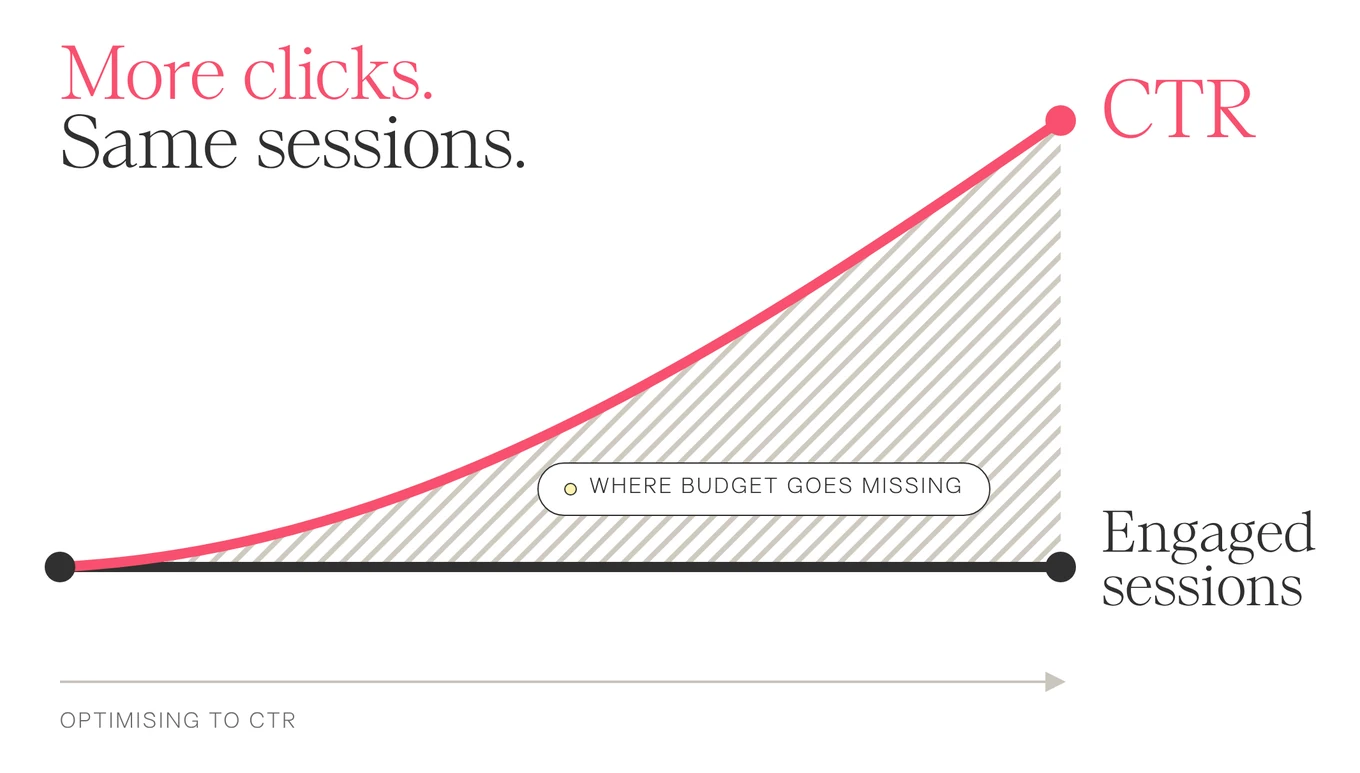
When CTR is the sole goal, a DSP learns to do just that: buy more of whatever produces clicks, without asking why the clicks happened. The placements that generate the most clicks, however, are often the ones built to generate accidental ones: crowded pages, layouts that shift under a thumb and other known UX tricks meant to push ad monetisation.
And what looks like optimisation only makes things worse, eventually resulting in an ad waste doom-loop. The algorithm finds the placements with the highest CTR, buys more of them and reports a rising CTR, while engaged sessions do not follow and the conversion rate stays flat. The budget drifts towards low-quality traffic, the CTR-to-conversion gap keeps growing, and display ads do anything but convert.
What are engaged sessions, and why are they a better traffic KPI?
An engaged session is a visit where the person did something after arriving, so it measures traffic by the actual behaviour instead of just the click. GA4 counts a session as engaged if it meets any one of three criteria: it lasts longer than 10 seconds, it has a key event (GA4’s term for a conversion), or it has two or more page or screen views.
The bar is reasonably low, but it does the job of screening out accidental clicks and quick glances. It certainly beats CTR, which cannot make that distinction because it stops at the click. So engaged sessions sit in the sweet spot between CTR and conversion rate, which is exactly where the problem lives, and give buyers a more reliable read on ad traffic quality: a click measures the ad, a conversion the end result, and an engaged session the in-between.
How does Picnic’s placement quality drive intentional clicks?
Well-placed ads on uncluttered pages get clicked on purpose, by people who are more likely to stay. The ad is easy to see, the UX is clean and nothing on the page pushes the visitor into clicking. So when a click does happen, it is a decision instead of a reflex.
PIQ, Picnic Inventory Quality, scores every placement from 0 to 100 on 100+ quality signals. Weighted for Quality Traffic, the four prioritised signals are the ones that point to whether a click is likely to be deliberate. Share of screen measures how much space the placement takes up, and share of viewport ad density how much of the ad space in view belongs to that one ad. Loading speed tracks how quickly the page becomes usable, and layout shift how much it moves as it loads, which is where many accidental clicks start. Any placement scoring below 30 is excluded by default, regardless of campaign goal, as these placements usually just waste ad budget.
Inventory quality already changes outcomes. In a like-for-like UK public sector OLV test, high-quality inventory delivered 3.6x more engaged sessions than low-quality inventory. Placement-level scoring applies the same principle to each impression, so buyers can value the placements that matter for their objective before they bid.
How do Picnic’s Optimised PMPs drive more engaged sessions?
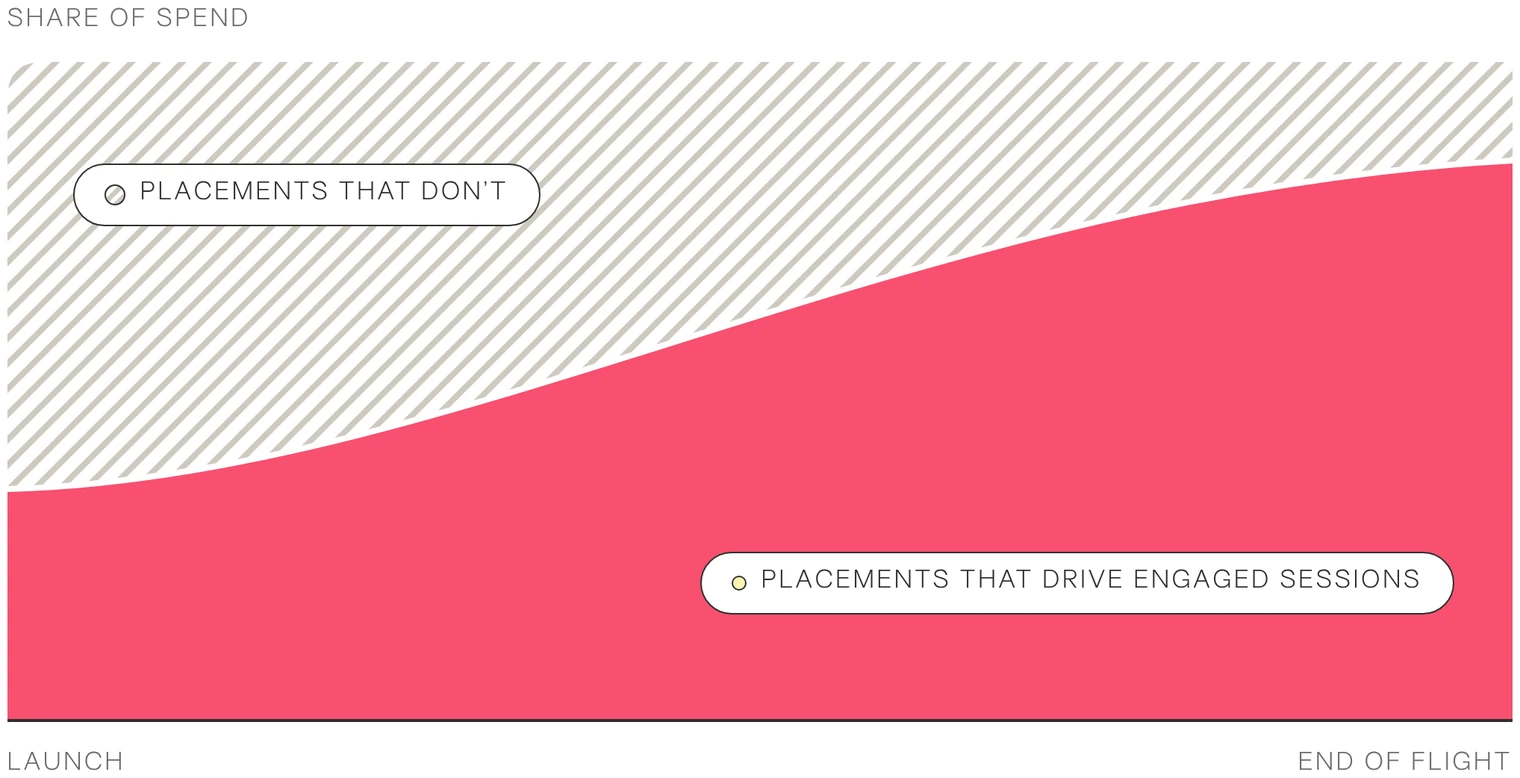
Picnic’s Quality Traffic Optimised PMP uses placement-level quality data to shift delivery in real time, towards placements where people click with intent and are more likely to stay, away from inventory where the click is the only page “success”. It runs inside the buy, as one PMP in the buyer’s existing DSP: the buyer sets up the deal, chooses Quality Traffic as the campaign objective, and Picnic’s model works behind the deal ID.
From day one, PIQ pairs quality signals with historical campaign data to identify placements likely to drive engaged sessions, so the campaign does not start with a blank slate. While the campaign is live, performance is constantly matched back to the placements that drove engaged sessions, and Picnic’s custom algorithm learns, optimises and continuously moves spend towards them.
Picnic’s Quality Traffic solution can optimise for:
- Engaged sessions: visits that go beyond the click, meaning GA4 sessions that qualify as engaged by lasting longer than 10 seconds, recording a key event (GA4’s term for a conversion) or having two or more page views. This KPI requires access to the advertiser’s Google Analytics data.
- Cost per engaged session (CPES): the media cost to acquire a single verified engaged session.
- CTR: the supporting signal tracked alongside engaged sessions, but never optimised for on its own.
The optimised result is less budget wasted on clicks with no conversions, and more of it put towards placements that send visitors who click on purpose and stay.
Quality Traffic is one of four campaign objectives an optimised PMP can be built around, alongside Brand Lift, Effective Reach and Video Views. The Optimised PMPs hub covers how the wider model works across all four.
Want to find out how many of your clicks are intentional?
Book a demo with the Picnic team.
You may also like
All articles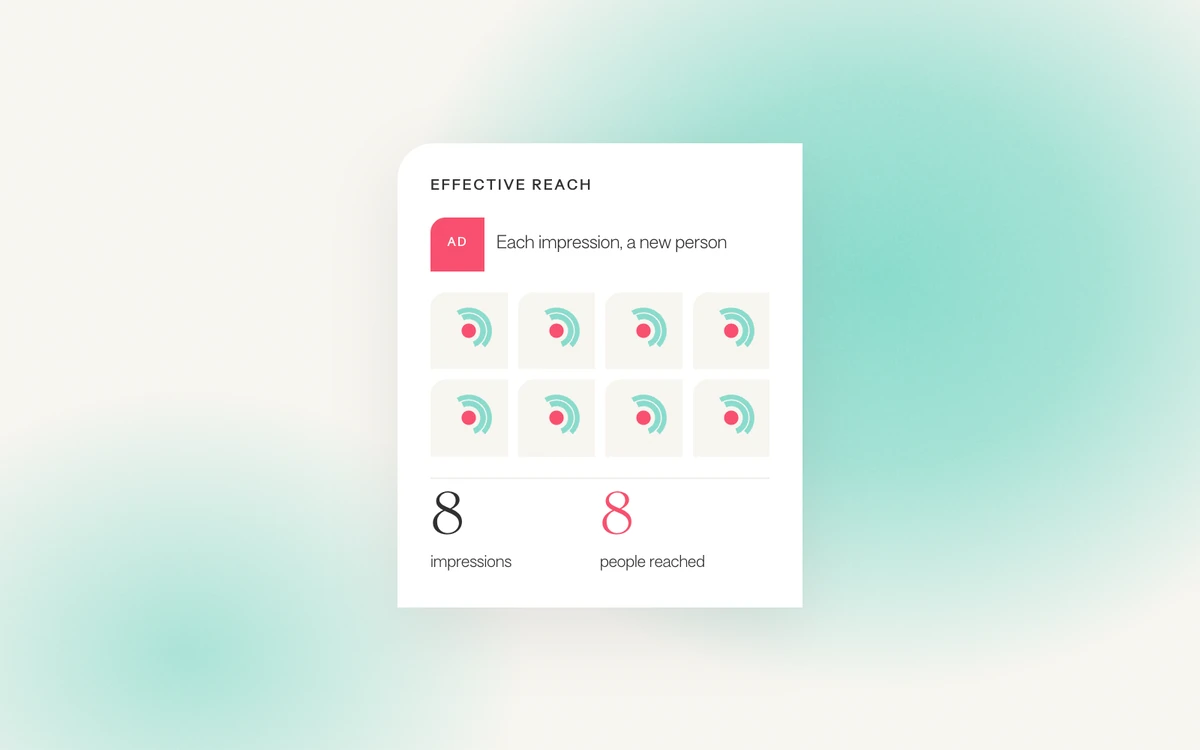 Industry
Effective reach: how to grow unique reach without wasting ad spend.
Unique reach is not always unique. How effective reach and placement-level inventory quality grow reach among the people who actually see the ad.
Read article Industry
Brand lift studies: how to act on results before the campaign ends.
Brand lift studies usually land after the campaign ends. How in-flight measurement turns a brand lift study into a live signal you can act on.
Read article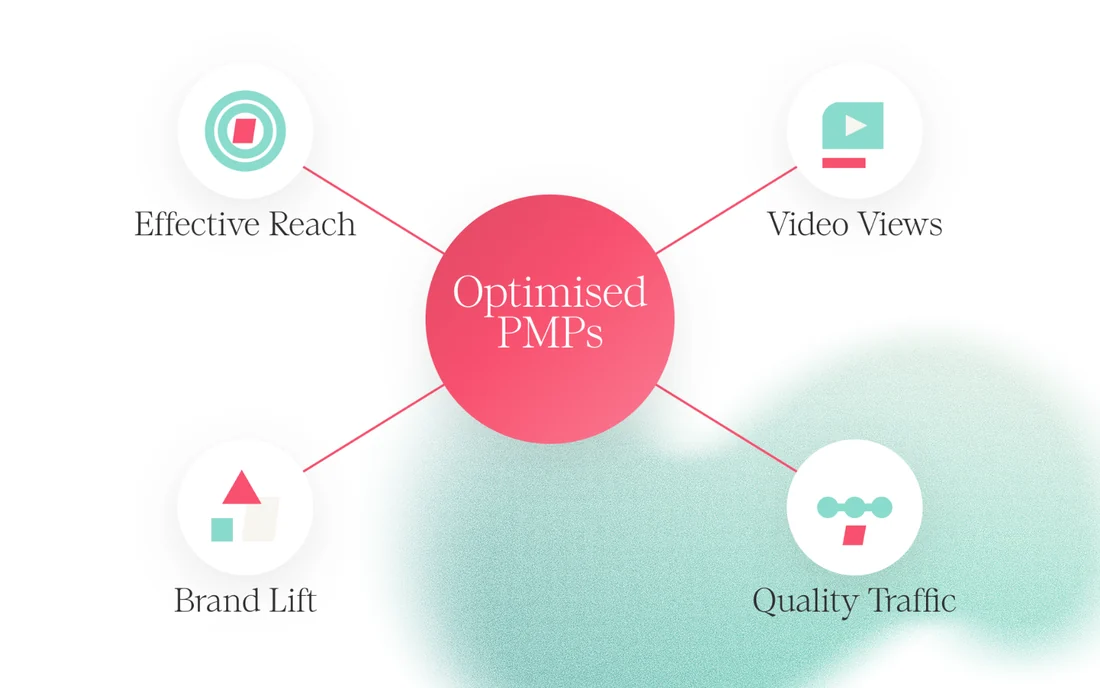 Product
Optimised PMPs: Putting Placement-Level Quality Into Every Bid.
Deals that combine PIQ placement-level quality data with live performance data to decide which impressions to bid on, and how much each is worth, in the DSPs buyers already use.
Read article